


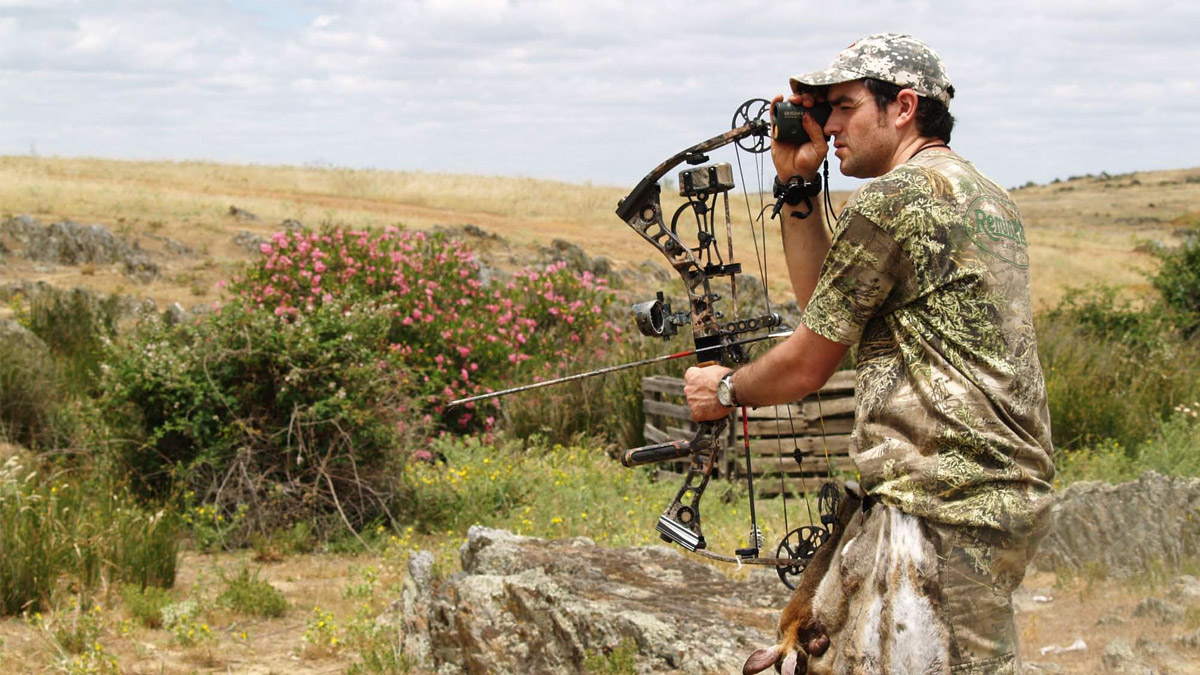
If you’re an archer, there’s no room for hesitation: gear up and get ready, because the long-eared quarry will test your skills the moment you set foot in the field. Let’s not underestimate this little creature or dismiss it as the “younger sibling” of archery hunting compared to wild boars. More than any other game, it reveals who we are with a bow in hand… And here’s why. Let me share some essential tips to avoid missteps when pursuing them.
Pre-Hunt Considerations
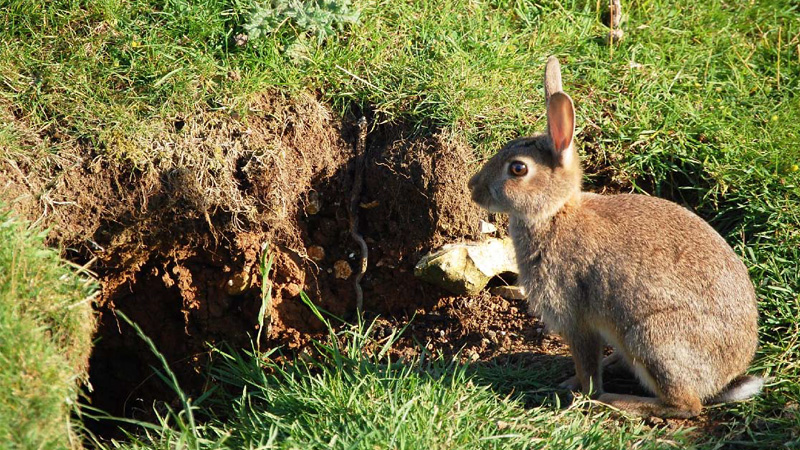
The rabbit, relative to its size, is the most resilient game in the Iberian Peninsula—far ahead of the second.
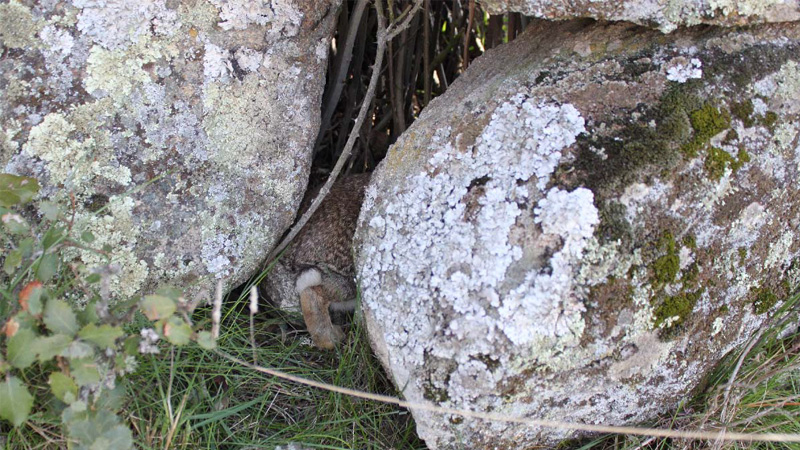
Moreover, since rabbits are usually close to their burrows or thorny shrubs, archers may find it easy to wound but not retrieve them—a scenario we must avoid at all costs. It’s crucial to ensure a clean kill on the spot. To achieve this, you need to aim for a vital zone: target the shoulder blade if it’s sideways or between the blades if it’s facing away. Forget about any other spots. This means your shooting skills must be razor-sharp.
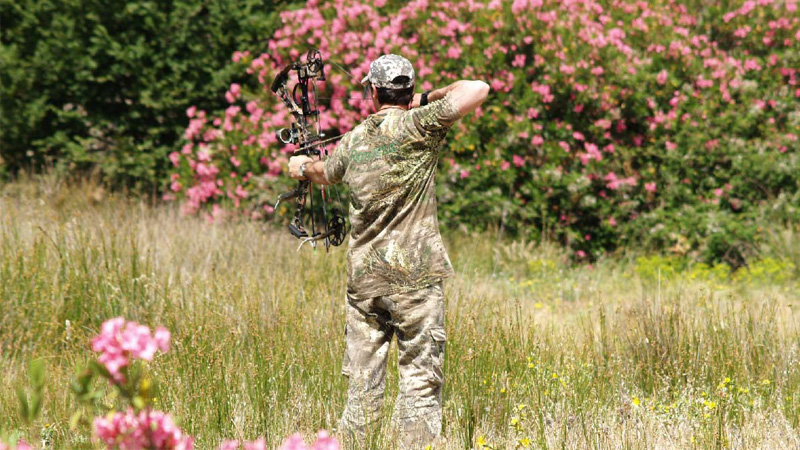
Your Equipment
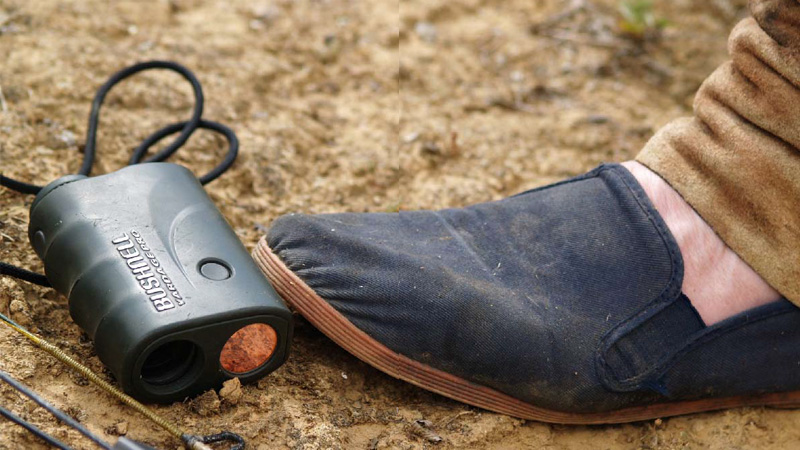
Your bow needs to be perfectly tuned, and understanding the distance to your target rabbit is critical. A rangefinder is a must, and lightweight, durable arrows are essential to ensure a flatter trajectory and withstand impact with the ground, which often breaks weaker arrows. A piece of wool attached to a visible part of your bow will help you determine wind direction—a vital tool to counter the rabbit’s incredibly sharp hearing, its most developed sense.
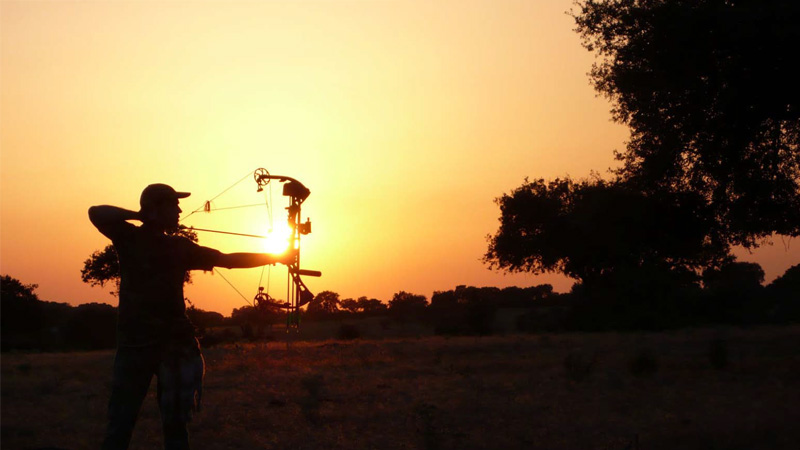
Opt for lightweight footwear with smooth rubber soles. Avoid heavy hunting boots, as they hinder stalking and create unnecessary noise. A bow quiver is the best choice since waist quivers may snag on vegetation and make noise. However, silence in the field ultimately comes down to how skillfully you move—it’s an innate talent, but also one that can be honed.
Hunting Tips
Bagging a rabbit with a bow isn’t hard; their abundance guarantees opportunities, and sooner or later, you’ll get your first one. The challenge lies in mastering the hunt: shooting at nearly every rabbit you stalk and retrieving almost every rabbit you shoot. That’s the essence of rabbit hunting, and it’s no easy feat.
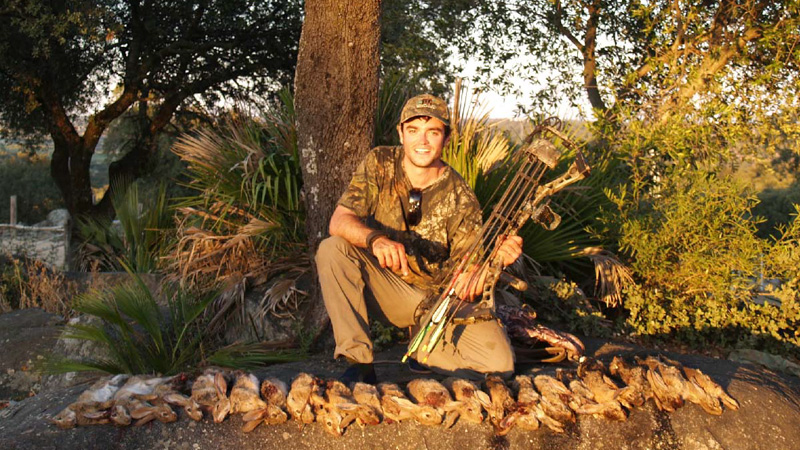
The best days to stalk rabbits are windy ones. The rustling of grass and shrubs masks your movements, allowing you to get close enough for a shot. On still days, stalking can be frustrating, so I prefer waiting for them near their burrows.
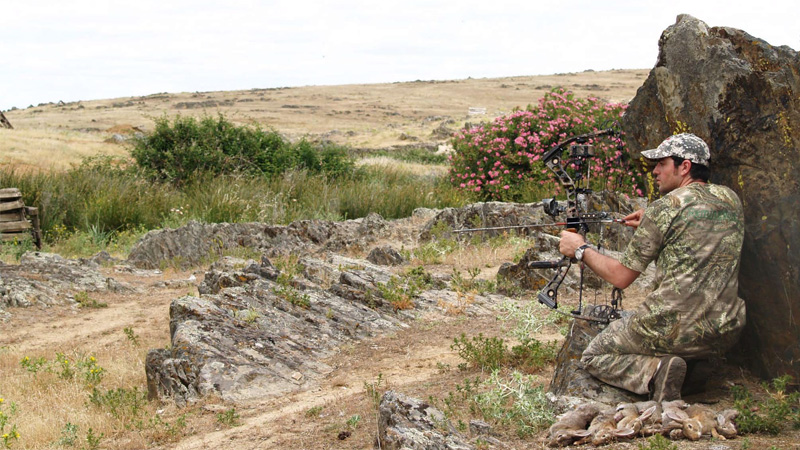
Midday is the best time to hunt rabbits. Avoid early mornings and late evenings when land predators are active, as the slightest noise will alert them. At midday, however, they are less on guard.
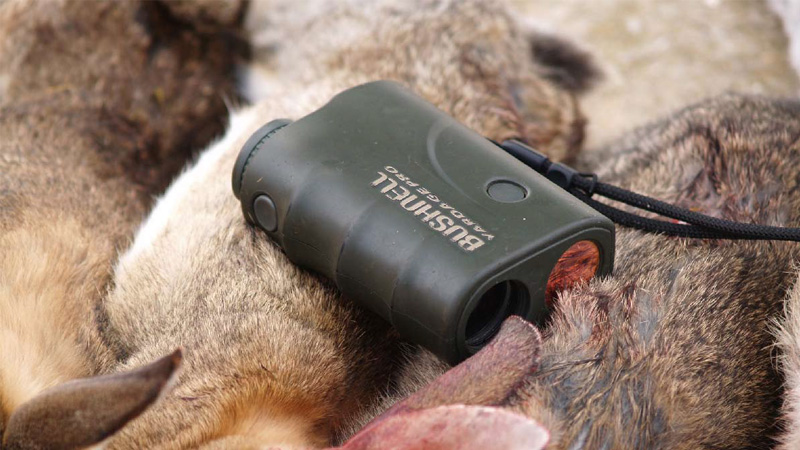
If there’s an abundance of rabbits, don’t rush your shots or take long-distance risks. Maintain a slow and steady pace. A close-range opportunity will eventually arise. Pay attention to the rabbit’s behavior—it will signal when you’ve reached the critical moment. This patience improves your success rate.
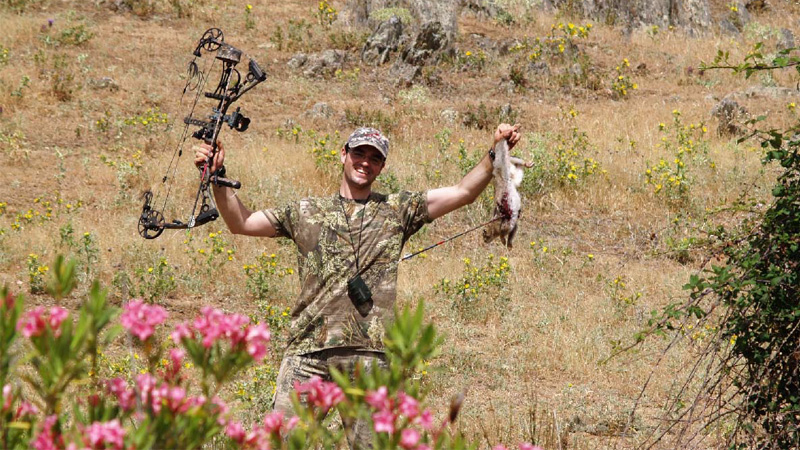
You need to memorize the exact distances where your bow’s pins offer a perfect shot. If you need to, step back a meter or two to reach, for example, those precise 25 meters where you can hit a coin-sized target (the rabbit’s shoulder blade) more reliably than at 23 or 24 meters.
A rabbit with an embedded arrow will be recovered 90% of the time, as the arrow will snag on burrow entrances or vegetation. For this reason, rather than trying for complete pass-through shots, aim for angled ones that force the arrow to “stick” into the ground. Even poorly placed shots can still result in a successful retrieval.
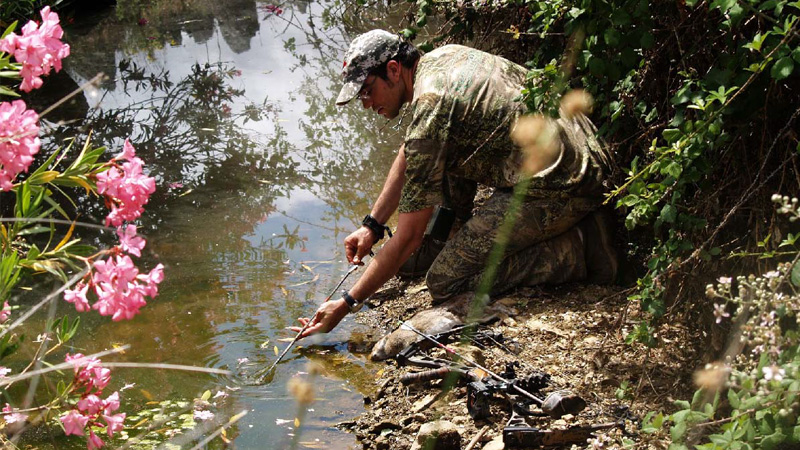
When crossing streams, approach from the right if you’re right-handed or the left if you’re left-handed. This allows you to draw your bow without exposing your entire body, revealing only the bow itself when aiming.
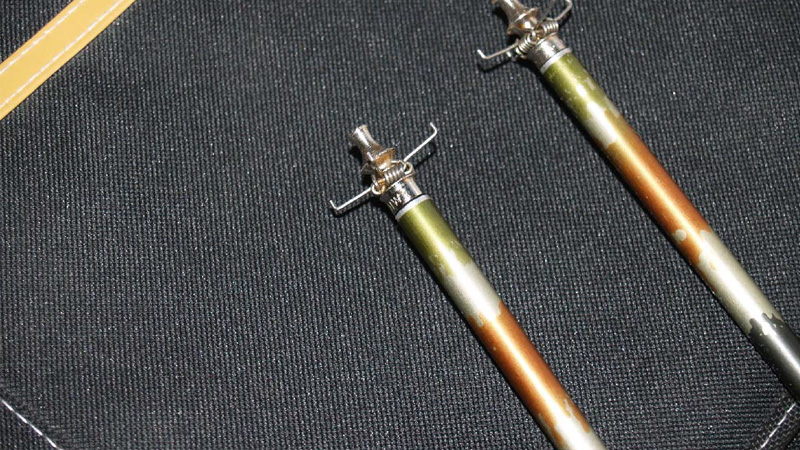
Use brightly colored fletching to help locate your arrows, wear sunglasses to reduce eye strain, and carry water to clean arrows if no streams are nearby. Dried blood can cause noise when it rubs against the arrow rest.
The best arrowheads for rabbits are Judo points. Their tough design and small wires prevent arrows from getting lost in grass and ensure they don’t dislodge from the rabbit while it runs. Judo points are synonymous with success in rabbit hunting.
Familiarity with the terrain is a game-changer. Know the most frequented burrows and sunny clearings where rabbits bask. Hunting the same area repeatedly will save you time on scouting.
For beginners, rabbit hunting is an excellent start. It allows you to refine your skills with frequent opportunities and serves as one of the most demanding types of hunting for experienced archers.
From these lines, I express my admiration for the rabbit—it continually challenges my skills, exposes my shortcomings, and provides immense joy in the chase and, of course, on the plate.
Photos: Jaime Hurtado, Stock Xchng, and Grupo Vigilancia y Gestión.
Este artículo también está disponible en español: Recechos de conejo con arco